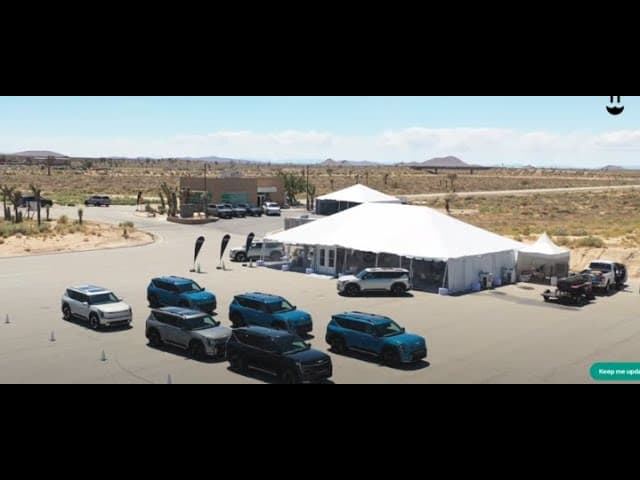
Hyundai gave V2X one global name. The electricity market did not follow
AllDayEnergy will put Hyundai, Kia and Genesis charging services under one badge, but the first release exposes the harder problem: V2X still changes at every border, utility and wallbox.
Hyundai Motor Group has found a tidy name for a deeply untidy business. AllDayEnergy will become the common identity for smart charging, vehicle-to-home and vehicle-to-grid services across Hyundai, Kia and Genesis. The customer-facing pitch is simple: one familiar energy service inside the carmaker's existing apps, wherever the driver happens to live.
The electricity system has other ideas. Hyundai's announcement promises a global identity, then immediately describes a country-by-country rollout beginning with one-way smart charging in the UK. Even the timetable is muddled: the bullet points say the second half of 2026, while the body of the same release says the second quarter, a date already past when Hyundai issued it on 24 July. Neither Hyundai nor Kia currently presents AllDayEnergy as a universally available V2G product.
A badge before a platform
That does not make the new organisation meaningless. Until now, Hyundai Motor Group's energy work has appeared as a collection of pilots, hardware partnerships and individual vehicle features. Bringing those pieces under one service identity gives the group a place to manage tariffs, charging schedules, driver permissions and future exports from the battery. UK Kia owners are due to see the first version through the Kia App, with Europe, the United States and Korea named as later markets.
But the order matters. AllDayEnergy starts with V1G, which can delay or reduce charging without sending electricity out of the car. V2H and V2G come later. Hyundai has supplied no global launch date, compatible-model list, charger list, tariff, export rate or price for those two-way services.
Utility Dive also points to the organisational obstacle in the US: roughly 3,000 electricity distribution companies, each carrying its own rates, interconnection rules and permitting. A shared app can hide some of that complexity from a driver. It cannot make those rules identical.
The EV9 shows what 'compatible' costs
Kia's existing American vehicle-to-home offer shows how much equipment sits behind an app icon. The EV9 works with Wallbox's Quasar 2, a bidirectional DC charger, plus a Power Recovery Unit that isolates the home from the grid during an outage. Wallbox's live demonstration uses the car as the household battery, while a more recent owner-channel interview with Kia walks through the same arrangement as backup power and a way to shift household consumption away from expensive periods.
That is useful, working technology, but it is not yet free-form interoperability. The charger, vehicle, transfer equipment, installer and local electrical approval all have to line up. The Quasar 2 and recovery hardware were offered in the US at $6,440 before tax and installation. A driver cannot assume that because an E-GMP car can run appliances through vehicle-to-load, it can export through any bidirectional wallbox to any utility.
The standard exists; the combinations do not
The International Energy Agency's 2026 V2G assessment supplies the awkward scale of the gap. It counted 22 production models with stated V2G capability, less than 1.5% of EV models. CCS gained a fully standardised bidirectional communication route through ISO 15118-20, but implementation varies between manufacturers and conformity testing is still being developed.
As a result, the IEA says every current commercial offer remains a package: specified vehicle models, a specified charger and a tariff from a specified utility. DC bidirectional chargers commonly cost $5,000 and upward. At an illustrative $500 annual owner benefit, the agency estimates that a DC installation can take as long as ten years to repay. Grid certification is regional too, so a car and charger proven in one country may not be cleared in the next.
This is where AllDayEnergy could earn its name. A manufacturer spanning three large car brands can maintain vehicle compatibility, negotiate with aggregators and present battery limits in one interface. It can also control warranty exposure, an issue the IEA says pushes manufacturers toward approved chargers and limits on energy throughput.
One app cannot flatten the tariff map
Hyundai's strongest near-term product may therefore be the least glamorous one. Smart charging needs no export permission and no household islanding hardware. It can move charging away from a network peak, favour lower-price hours and keep the driver's departure target intact. Those functions travel more easily than V2G, even though the tariff logic underneath them still has to be rebuilt market by market.
The group describes AllDayEnergy as a consistent experience, not an identical product. That distinction is doing heavy work. In Britain it may first mean scheduled Kia charging. In America it may sit beside an EV9 and a Quasar 2. In Korea it may develop through Hyundai's AC V2G pilot and changing grid codes. Genesis has been named in coverage of the umbrella strategy, but Hyundai's release says services will appear through Hyundai and Kia vehicle apps and gives no separate Genesis schedule.
A common button, then, is plausible. A common electricity product is not. AllDayEnergy will be worth watching because its success can be measured without another speculative storage forecast: whether the list of compatible cars, chargers and utilities gets longer, and whether Hyundai fixes the date on its first launch.
- https://www.hyundai.com/worldwide/en/newsroom/detail/0000001237
- https://www.utilitydive.com/news/hyundai-unifies-vehicle-v2x-capabilities-with-alldayenergy-entity/828129/
- https://www.iea.org/reports/vehicle-to-grid-technology
- https://www.youtube.com/watch?v=H0WGl_U5azs
- https://www.youtube.com/watch?v=pPuCIsh6aWU
- https://www.youtube.com/watch?v=hnprRBk9GIE
More from the file
PG&E's V2X pilot reaches 51 homes, but the approved-hardware maze remains
PG&E has expanded its bidirectional charging pilot from a near standstill to 51 interconnected customers. The fine print shows why turning an EV into a grid asset is still an installation project, not a feature toggle.

The grid scorecard that leaves EV charging ungraded
IREC's 2026 Freeing the Grid report handed one state an A and thirteen an F. Its grades cover exported power, not the load-connection process that can hold up truck charging depots.
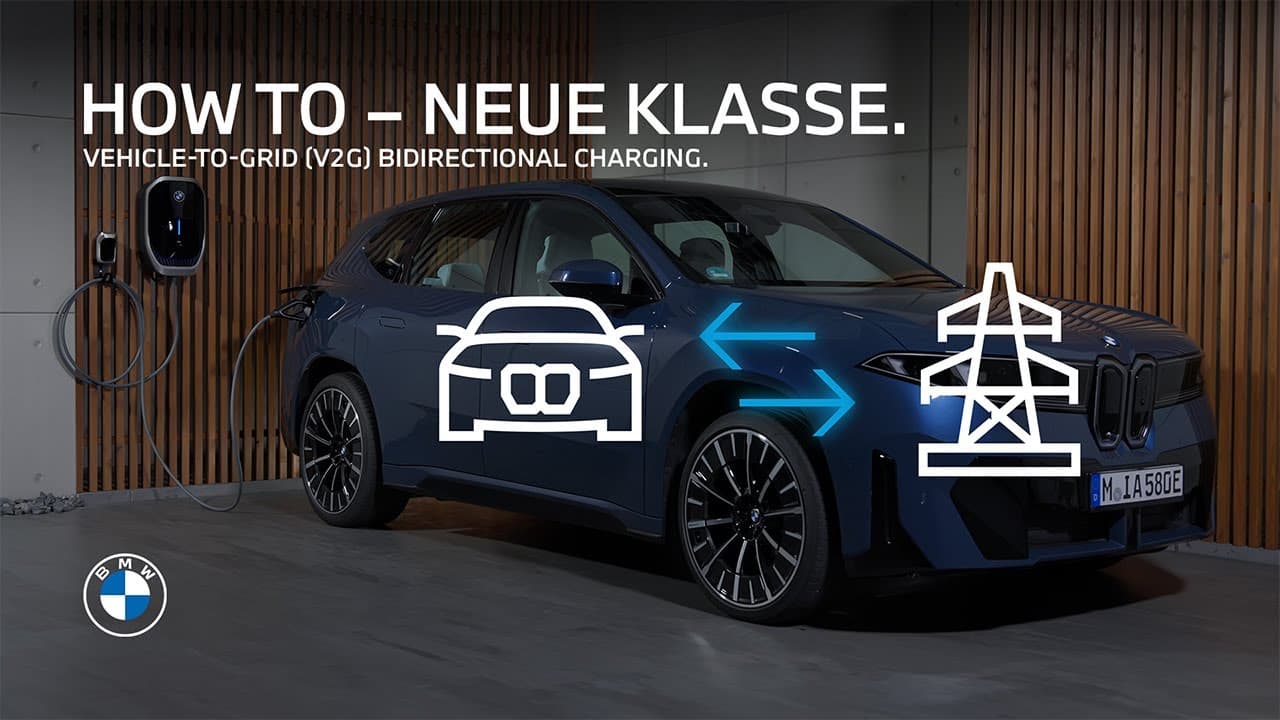
California wants 9 GW from parked EVs. Germany is selling the kit
GridLab says 10 percent of California's projected EV fleet could cover a third of the state's 2036 long-duration storage target. The cars that can actually export still come as a branded charger, tariff and app.