
V2G's price tag is settled. The cars to collect it are not
PG&E is now paying up to $4,000 up front for bidirectional home charging and GM's own study values vehicle-to-grid at five to 15 times smart charging. The shortage has moved from proof to product.
By EV News Desk
The cheque came first. On 24 August, Pacific Gas and Electric widened its residential Vehicle-to-Everything programme to take in bidirectional-capable models from Kia, Volvo, Polestar, Nissan and General Motors, alongside hardware from Bidirectional Energy and PowerFlex. A California household that qualifies collects $2,500 up front — $3,000 in a disadvantaged community — and the first 250 enrollees add a $1,500 early-adopter payment on top. Certain vehicle-and-charger pairings can stack up to $13,000 more in California Energy Commission grant money. Commercial sites fitting three-phase bidirectional chargers can claim as much as $5,000. Enrollment runs to 30 June 2027.
That is a utility paying real money for a capability most drivers still cannot buy. Which is the whole story of vehicle-to-grid in 2026: the value has been quantified, the codes are ready, the money is on the table — and the car in your driveway probably still can't take it.
The number that changed the argument
In July, energy modelling consultancy E3 published a study commissioned by General Motors that put a figure on the gap between smart one-way charging and true export. Per vehicle, in many US electricity markets, V2G is worth five to 15 times what V1G is worth. Nationally, E3 put the prize at roughly $7 billion a year by 2030.
The regional breakdown matters more than the headline. E3 found annual per-vehicle value of $2,200 to $2,750 in constrained zones — California, downstate New York, PJM's eastern load zone — with ERCOT reaching about $2,270 despite being an energy-only market, and $1,700 to $2,200 across the Pacific Northwest, Rocky Mountain and Southwest zones where utilities lean on bilateral capacity contracts. E3 was blunt about why so little of that is being collected: "regulatory and program design barriers" such as pilot rules and retail export structures.
GM says it already has 250,000 bidirectional-capable vehicles on American roads and has committed to the technology across every EV it has planned. In collaboration with PG&E, it projects that more than 52,000 GM EVs will participate in grid-balancing protocols by 2030. Read the PG&E announcement next to that target and the incentive stack stops looking like generosity and starts looking like procurement.
The code was never the problem
A common assumption is that electrical code is the thing holding bidirectional hardware back. Alex Jahp, an instructor at training provider HeatSpring, spent a June segment explaining why that is backwards. Article 625, which governs EV power transfer, saw no significant rework in the 2026 National Electrical Code cycle — and in his reading, that absence is the point.
Jahp said the 2026 NEC made no major changes that either facilitate or impede vehicle-to-grid equipment. He regarded that as good news: the code as written already accommodates those functions.
The work that actually gates deployment, Jahp said, has been happening alongside the code, in product safety and interconnection standards that the NEC defers to. He described that effort as "coming to fruition now," and expects bidirectional equipment to become a standard offering from EV manufacturers, with utilities creating interconnection pathways that "properly value it." UL published a new V2G standard in July, which fits his timeline.
What it looks like from a driveway
Australia is a useful preview, because retail electricity there can expose households to wholesale prices directly. Amber Electric published an interview with a customer, Sam, who installed an all-in-one V2G and stationary battery setup and ties the hardware to a platform that trades against the spot price at his address. On one unusually volatile afternoon, he said, the arrangement generated more than $700 in credit — an outlier he was careful to frame as an outlier. On ordinary days, he described simply zeroing out his bill without importing or exporting much at all.
His comments on battery wear are worth sitting with. Discharging at 12.5kW, he reckoned, draws about what driving 60km/h on flat road does; most of his vehicle-to-home use runs closer to 1kW, which he likened to crawling. He accepts there is some degradation cost and thinks it is small for typical use. Asked what he would demand of his next EV, he put V2G capability first — ahead of the usual performance criteria — followed by manufacturer support written into the warranty, locally approved hardware, and software intelligent enough to co-ordinate the car with the house and the grid rather than merely switching flow on and off.
The lock that stays shut
A survey of the field published this month by the channel Tech With Receipts, drawing on International Energy Agency and University of Delaware material, lands on the same constraint from the consumer side: the IEA counts only 22 EV models worldwide with stated V2G capability, under 1.5 per cent of models on sale, and not all of them work with every charger in every country. An AC bidirectional wall box can come in under $1,500 because the car does the conversion; DC systems start nearer $5,000 before installation.
The video also flags a finding that ought to reshape how these programmes are pitched. In a University of Delaware trial running four modified electric SUVs against a real grid operator's control signals, simple energy arbitrage would have returned about $874 a year per car at recent market prices — while standing by for frequency regulation modelled at $1,100 to $3,300. No bids went to market and nobody was paid; the figures are calculated, not banked. But the shape of the result matches the commercial offer the video describes from BMW and E.ON in Germany, which pays per exported kilowatt-hour and a bonus of up to €720 annually for hours simply connected with V2G active.
Availability, not electricity, is what the grid is short of. PG&E's incentives buy hardware; the harder question is whether the tariffs underneath them will pay drivers for sitting still.
- https://www.stocktitan.net/news/PCG/more-california-ev-owners-can-now-power-their-homes-save-on-energy-kt7h43uux0ng.html
- https://www.utilitydive.com/news/v2g-could-deliver-15-times-more-value-than-one-way-managed-ev-charging-rep/826458/
- https://www.youtube.com/watch?v=IvK7k9k-UgY
- https://www.youtube.com/watch?v=8mw7UyjmBkk
- https://www.youtube.com/watch?v=xNI8Kiu5OPQ
- https://chargedevs.com/newswire/ul-releases-an-important-new-v2g-standard/
More from the file
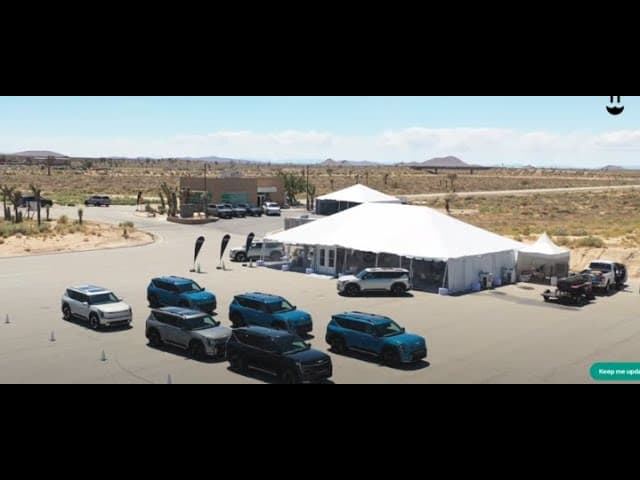
Hyundai gave V2X one global name. The electricity market did not follow
AllDayEnergy will put Hyundai, Kia and Genesis charging services under one badge, but the first release exposes the harder problem: V2X still changes at every border, utility and wallbox.
PG&E's V2X pilot reaches 51 homes, but the approved-hardware maze remains
PG&E has expanded its bidirectional charging pilot from a near standstill to 51 interconnected customers. The fine print shows why turning an EV into a grid asset is still an installation project, not a feature toggle.

The grid scorecard that leaves EV charging ungraded
IREC's 2026 Freeing the Grid report handed one state an A and thirteen an F. Its grades cover exported power, not the load-connection process that can hold up truck charging depots.