
Tesla's European Semi puts payload ahead of maximum range
Tesla quotes 550 km at 40 tonnes and 800 kW charging for its European Standard Range Semi. Payload looks promising, but trailer weight and operating conditions matter.
Illustrative image: parked freight trucks, not the Tesla Semi.
Tesla Europe published its Semi specifications on 11 September: up to 550 km of range at 40 tonnes fully loaded, consumption of 1 kWh/km and charging at up to 800 kW. The announcement also lists a 25 kW electric power take-off and a 9,100 kg curb weight. For a haulier, that last number deserves as much attention as the range.
No price. No precise delivery date. No confirmed European battery capacity. Tesla says customer deliveries will begin in 2027, according to Electrive's account of the company's announcement. The European specification will be shown at IAA Transportation in Hannover, open to visitors from 15 to 20 September.
This is the Standard Range truck
The obvious comparison is with the American Long Range Semi's advertised 500 miles, about 805 km. It is also the wrong starting point. Electrive reports that Tesla's German webpage explicitly names the European model Semi Standard Range. A shorter headline range does not, by itself, show that a comparable truck has become less capable.
At 9,100 kg, roughly 20,000 lb, the European tractor is consistent with the lighter US Standard Range specification. Electrive suggests it may use the same 548 kWh battery, but Tesla has not disclosed European pack capacity. That remains an inference, not a specification an operator can put into a purchase contract.
The US Standard Range model is advertised at about 325 miles, or 523 km, and 1.7 kWh per mile. Europe's figures are 550 km and 1.0 kWh/km. Speed, trailer aerodynamics and load all influence that comparison; converting miles into kilometres does not make two test cycles identical.
Read the footnotes
Electrive reproduces Tesla's range-estimate conditions: 40 tonnes gross train weight, 80 km/h, 20 degrees Celsius and a flat road, with an Aero Kit and a dry van semi-trailer to California standards. It also reports Tesla's warning that tyres, roof fairing and trailer configuration materially affect consumption.
That is a specific set of assumptions, not a promise for every European route. An operator using different trailer equipment or running through winter needs results for that job before treating 550 km as a dependable daily working range.
The payload case is stronger than the range case
Work the curb weight forward and the payload argument appears. Electrive's illustrative calculation allows 6.3 tonnes for the trailer. That must mean its unladen weight, not its loaded gross weight: 40 minus 9.1 minus 6.3 leaves 24.6 tonnes for cargo. At a permitted combination weight of 42 tonnes, the same arithmetic gives 26.6 tonnes. Neither figure is a certified payload for every route; the legal weight allowance and actual trailer specification must be checked.
For an operator hauling anything dense, that number matters more than the range headline. Tesla appears to have chosen a payload-optimised configuration and accepted shorter legs to get it, which is a coherent decision for regional and long-haul work built around driver rest breaks rather than 800 km single hops.
The European truck also drops the American light bar and appears to have a shorter wheelbase, according to autoevolution's inspection of the released images. The publication identifies rearview cameras in place of mirrors. Electrive reports a central driving position, standing headroom, acoustic glass and a heated and ventilated seat, plus a 6x4 layout with three motors across the rear axles. Its reported 800 kW propulsion output is a separate figure from the charging limit.
Where 800 kW leaves the duty cycle
Tesla quotes recovery of about 60 percent of range in 30 minutes at up to 800 kW for Europe. The often-cited US figures of 1.2 MW and roughly 70 percent in half an hour concern the Long Range truck. They do not establish a charging downgrade against an equivalent American Standard Range model.
Peak power alone also cannot tell a fleet how much useful driving a stop will buy. That depends on the charging curve, starting charge level and consumption after departure. Tesla plans a European Megacharger network alongside Semi Service Centres and licensed workshops, Electrive reports, but has not specified the first markets or a detailed rollout timetable.
Tesla faces established European electric-truck suppliers, including Mercedes-Benz, Volvo, MAN, Scania, DAF and Renault. Range leadership is not the whole commercial contest. A truck that carries the required load, fits an existing loading bay and can be serviced promptly may be more useful than one with a longer advertised range.
The Hannover questions are practical: what does the tractor cost, which trailer was used for its range estimate, and where can a fleet charge and service it? The payload arithmetic gives buyers a reason to ask. It does not yet give them a complete operating budget.
- https://electrek.co/2026/09/11/tesla-european-semi-specs-550-km-800-kw/
- https://www.electrive.com/2026/09/12/tesla-semi-for-europe-offers-decent-range-and-excellent-payload/
- https://www.autoevolution.com/news/tesla-semi-officially-launches-in-europe-with-standard-range-specifications-still-built-in-the-us-275472.html
More from the file

Tesla's rare-earth-free Cybercab motor: what the 5DU shows, and what Tesla left out
An 18 per cent smaller, 25 per cent lighter drive unit with no rare earths is a genuine supply-chain achievement. The efficiency headline is the least important part of it.
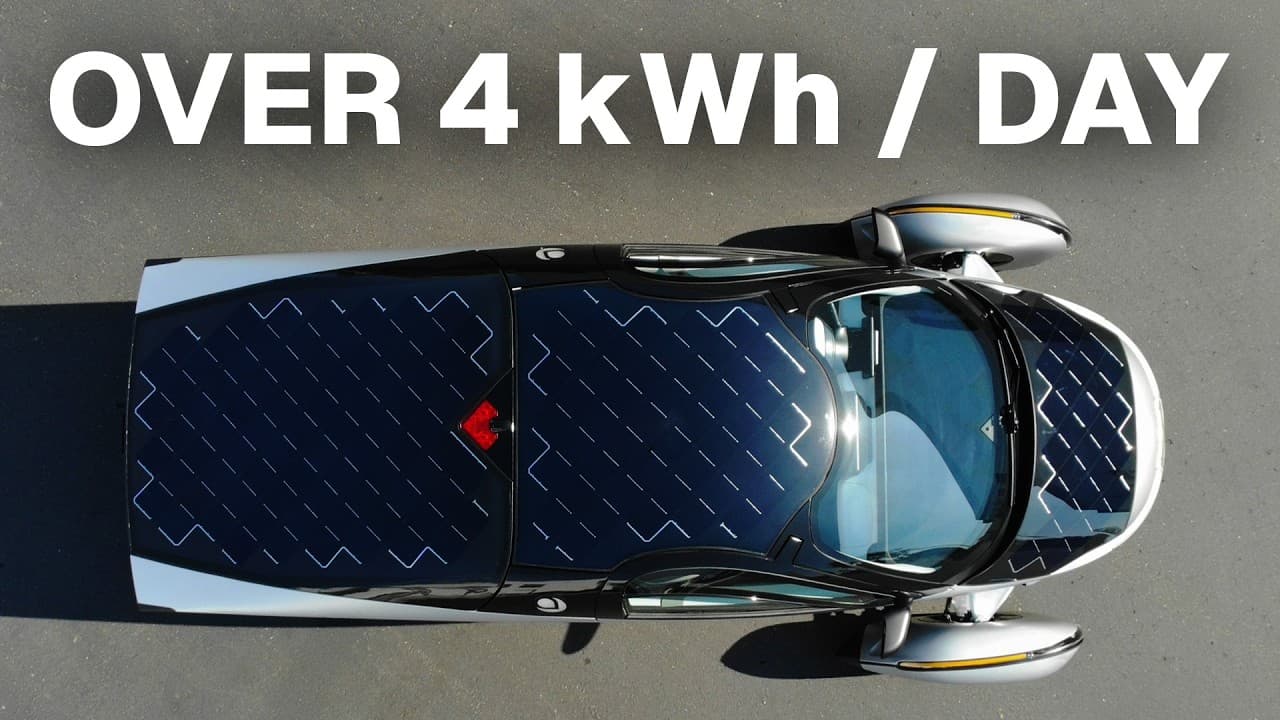
Aptera let an outside lab wire up its solar car. The number survived
TÜV Rheinland spent three days instrumenting every solar string on Aptera's three-wheeler and measured 4.23 to 4.75 kWh a day at the battery — up to 47 miles of driving on sunlight. The solar-yield claim now has independent support. The balance sheet is another matter.