
Porsche Cayenne Electric goes 345 miles, then adds 80 kWh in 15 minutes
Independent testing put Porsche's Cayenne Electric at 344.7 miles at 70 mph, then 185.8 miles after a 15-minute charge. Its charging curve is the standout.
By EV News Desk
Two large electric SUVs rolled to a stop on the same North Carolina exit ramp this month, both drained to zero, both waiting on a diesel truck with a mobile DC charger strapped to the back. One was a Rivian R1S. The other was Porsche's new electric Cayenne, flown in from Germany specifically so that Out of Spec Reviews could run it flat. The Rivian needed a jump box before it would accept charge, its 12-volt system having gone down with the pack. The Porsche took 10% of its battery in about five minutes off the back of the tow truck and drove away.
That small difference in how the two cars behaved at the very bottom turns out to be the whole story of the Cayenne Electric. Its headline range number is good but not remarkable. What it does with a charging cable is something else entirely.
345 miles from a battery that should not manage it
Out of Spec ran the base long-range Cayenne through its 70 mph highway test: full charge, cruise set, drive until the car can no longer hold the speed. It stopped at 344.7 miles, which the channel rounded to 345. Measured energy out of the pack came to roughly 109 kWh against Porsche's claimed 108 kWh usable, for an average of 316 Wh per mile, or a little over 3.1 miles per kWh.
The tester called it “impressive to get almost 3.2 miles per kWh at 70 out of a big bulky SUV,” and the arithmetic backs him up. This is a two-and-a-half-tonne SUV clearing 340 miles from a 108 kWh usable pack. The car was specced deliberately for it: the no-cost factory downgrade to 20-inch aero wheels, no sunroof, no rear-axle steering, no tow package. Porsche has not yet had the car EPA-rated.
The comparison car was a second-generation R1S dual-motor with the Max pack, roughly 140 kWh, rated at 410 miles combined. It showed 358.3 miles, about 356 once speedometer error was corrected. But that R1S had 27,000 miles on it and an estimated 4% of capacity lost, which Out of Spec reckoned would have put a fresh example around 370. Like for like, the honest gap is 20 to 25 miles — from a battery roughly 30% larger.
The test that actually flatters it
Out of Spec's “10% challenge” is a road-trip simulation rather than a range test. Arrive at a fast charger at 10% state of charge, plug in for exactly fifteen minutes, then run 80 mph until the battery drops back to 10%. It rewards charging power and highway efficiency together, and punishes cars that need a long plug-in to be useful.
Run at an IONNA Rechargery in Garner, North Carolina, in 91-degree heat with cabin cooling running, the Cayenne went from 10% to 78% in those fifteen minutes: 80 kWh added, averaging 320 kW, peaking around 385 kW, at a cost of $33. Porsche quotes 16 minutes for 10 to 80%. The car nearly did it in 15, on a hot day, while thermally derating against a 135°F battery ceiling.
It then covered 185.8 miles at 80 mph before dropping back to 10%, holding about 2.6 miles per kWh throughout. That is second place in the channel's all-time table, behind a Taycan sedan's 193 miles — and the Taycan set that number in roughly 48-degree ambient temperatures at elevation. Out of Spec's own read is that the Cayenne was thermally limited by the heat and would likely have matched or beaten the sedan in cooler conditions, which it treats as effectively a tie for first. For scale, a Taycan Sport Turismo managed 158 miles in the same test.
Spec the badge you want, but know what it costs
None of those numbers describe the car most people will photograph. carwow tested the Turbo, recording 1,156 horsepower, 2.46 seconds to 60 mph, a 9.98-second quarter mile and 29 metres from 60-0 despite a 2.6-tonne kerb weight. On 22-inch wheels wearing aggressive P Zero R tyres and driven hard, it averaged 2.4 miles per kWh. From that observed consumption, carwow estimated roughly 250 miles rather than the claimed 350. carwow's verdict was that the range “isn't amazing,” that the standard car earns a shortlist, and that the Turbo is for people who specifically want its outsized performance.
The spread between 345 miles and 250 is not manufacturing inconsistency. It is wheels, tyres and right foot, and it is a wider swing than most buyers assume when they work down the options list.
What the base car gives you
Motormouth's Zack and Andrea drove the base version in Vancouver and made the case that it is the one to buy. Every electric Cayenne gets the 113 kWh pack and all-wheel drive; the base model is quoted at up to 435 horsepower and 616 lb-ft, enough for 4.5 seconds to 60 mph. Air suspension is standard, which it is not on the combustion car below Turbo trim. The wheelbase has grown by more than five inches over the petrol Cayenne, and rear legroom is up about two inches.
Both hosts, who between them have owned three Cayennes, noted that with roughly 97% of braking handled by the motors, the single most expensive consumable on a conventional Cayenne largely stops being one.
Pricing is where the enthusiasm cools. The base electric Cayenne starts at about $109,000 in the US and just over C$131,000 in Canada; the Turbo runs to roughly $163,000 and C$178,000. The car takes up to around 390 kW on an 800-volt DC connection, needs 26 minutes for 10 to 80% on a 400-volt station, tows 7,700 lb, and carries both a NACS and a CCS port.
Buy it for the range figure and you are paying Porsche money for something a Rivian does slightly better. Buy it for the fifteen minutes you spend standing next to a charger somewhere on the way, and the maths reads very differently.
More from the file

The 2026 Solterra earns a second look, with a motorway-range caveat
Fresh French efficiency testing and an earlier US charging test show why the revised Solterra deserves another look, and why buyers must keep market specifications separate.

Two Independent Tests, One Number: The VW ID.3 Neo Really Does Use 15 kWh/100km
German and British testers put the 58 kWh ID.3 Neo through separate real-world runs days apart and arrived at nearly identical efficiency. That single figure reshapes which battery you should buy.
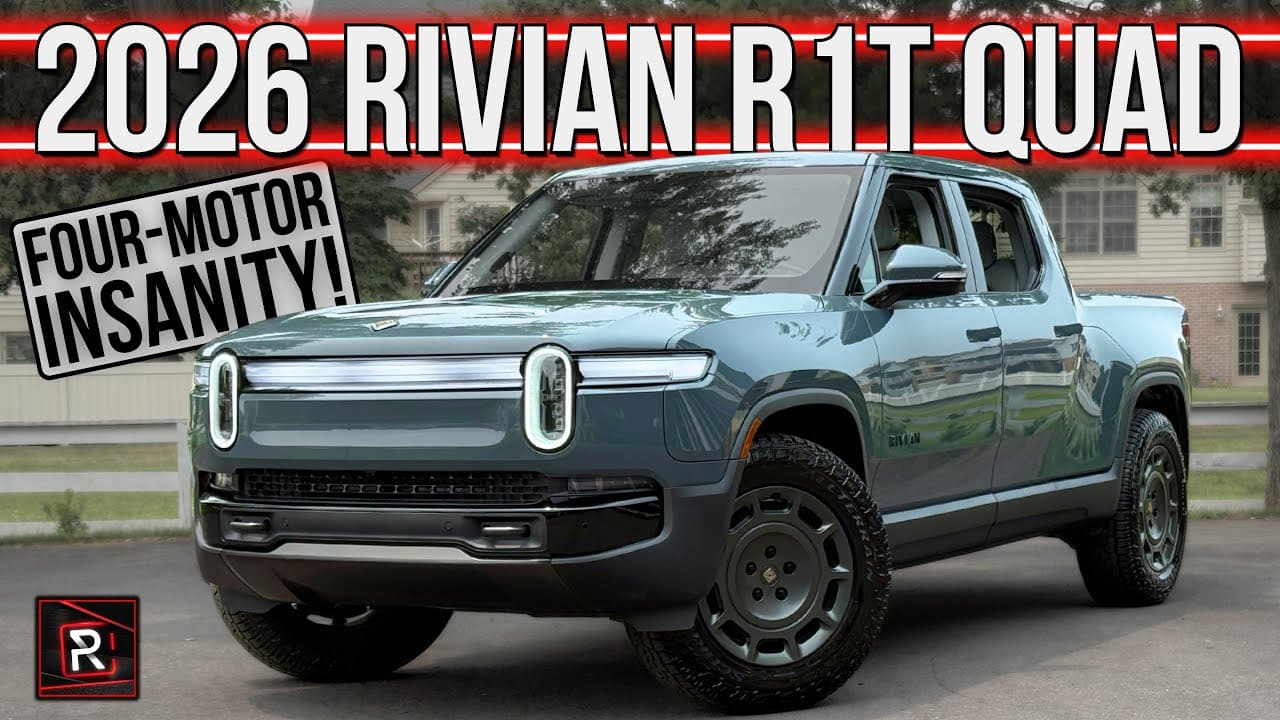
Rivian's 1,025-horsepower R1T costs $124,000. Its charging is less exotic
The quad-motor R1T is among the quickest vehicles on sale, but it is not especially efficient, tops out at 220 kW and still lacks massaging seats.