Battery-plant storage pivots run into data-center backlash
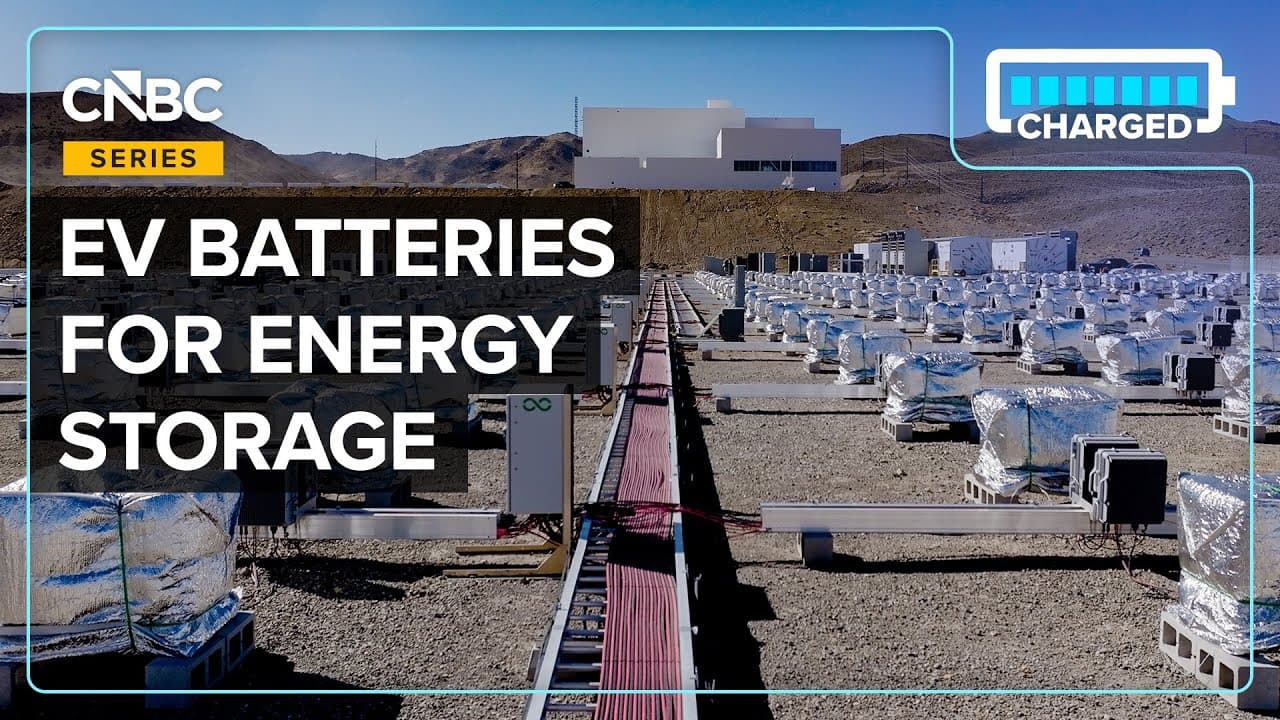
Ford and GM are finding grid-storage work for battery capacity built around stronger EV forecasts. Data-center demand offers growth, along with a fast-spreading local political fight.
By EV News Desk
Franklin County, Missouri, is about 800 miles from Glendale, Kentucky, and until recently the two places had nothing to say to each other. Then a town hall in rural Missouri ran for thirteen hours. ABC News, which sent a crew, recorded residents shouting “we do not consent” at officials weighing two proposed data centers, worried about utility bills, water and farmland. One speaker warned the county board it would “ruin the very best part of Franklin County if you allow data centers to be built on this land.”
Glendale is where Ford plans to spend roughly $2 billion converting an EV battery plant into a factory for grid-scale storage systems aimed at data centers, utilities and other commercial customers. The fight in Missouri is now, indirectly, part of the market calculation behind that plant.
The pivot that saved the capacity
EV sales have fallen short of the forecasts behind some recent American battery investment. Ford and GM are finding another use for that capacity in stationary storage, the large packs that utilities and industrial customers use to shift power across hours of the day. Tesla, already an established storage producer, shows why the adjacent business is attractive.
Ford’s version is the bluntest. Its BlueOval SK park in Hardin County, built for vehicle cells, is being reconfigured for battery energy storage systems aimed at utilities and data centers, a switch Kentucky Governor Andy Beshear told WLKY would take roughly eighteen months. Around 1,600 current employees are affected. Beshear said Ford expects to add about 2,100 jobs and invest around $2 billion over two years, and framed the decision as insurance rather than retreat: “What I do think it does is it secures the future of Kentucky One. And as long as battery storage is moving the way that I think it will, it creates a good possibility for Kentucky Two.”
The financial case is easy to see. CNBC’s reporting on the sector notes that Tesla’s EV sales fell for a second consecutive year in 2025 while its energy division became the company’s biggest growth driver in the third quarter, with sales up 44% year over year and gross margins near 30%, roughly double what Tesla earns on cars. When GM and Redwood Materials announced plans to use new and second-life cells for storage, CNBC reported, they cited AI data center demand explicitly.
GM has spread the bet wider. Its Ultium Cells joint venture with LG Energy Solution has begun making lithium iron phosphate cells for stationary storage at Spring Hill, Tennessee, backed by a $70 million investment, and the company plans to produce sodium-ion storage cells from 2028 with Peak Energy. Ford Energy expects to begin producing storage systems in Kentucky next year and reach 20 GWh of annual capacity in 2027.
What the pivot inherited
Supplying storage to data centers also means taking on some exposure to the industry’s politics, and those politics have turned fast.
Data Center Watch, cited by CBT News, counted opposition disrupting at least 75 projects worth roughly $130 billion in the first quarter of this year alone. ABC News reported that fifteen states have proposed temporary bans on new data center construction, and that a National Republican Senatorial Committee memo warned the issue could cost the party a Senate seat in Ohio.
Elected officials are moving accordingly, and not along party lines. Texas Governor Greg Abbott, who last year called his state the epicentre of AI development, has put a freeze on new data centers and told ABC’s Jonathan Karl that companies must “first get the approval of those in local communities.” Pennsylvania Governor Josh Shapiro, who promoted data center investment a year ago, is imposing new restrictions, telling residents: “You don’t want these irresponsible, burdensome, reckless AI data centers in your community. And I want you to know I hear you.”
Supplying batteries is not the same as developing a data center, but it connects an automaker’s energy business to arguments over electricity prices, water and land use.
The wider manufacturing picture is thinner than it looks
The pivot is happening against a shrinking backdrop. A report released this month by Environmental Defense Fund and Atlas Public Policy, The State of Clean Energy Manufacturing in Q2 2026, found companies announced $7.9 billion in new clean energy manufacturing investment in the quarter while cancelling $2.9 billion, leaving $5 billion net. Since the start of 2025, the authors count $39.6 billion in cancelled investment and 53,400 announced manufacturing jobs withdrawn.
The quarter’s headline project, Convalt Energy’s planned $5 billion solar manufacturing campus in New Mexico, was only the third clean energy manufacturing investment above $1 billion announced in eighteen months. In the previous eighteen-month period, from July 2023 through December 2024, there were 24.
EDF technical analyst Grace Hauser argued that companies “see what the Trump administration refuses to acknowledge: clean energy technologies are cost-competitive and here to stay,” adding that “recent policy changes are putting America’s manufacturing competitiveness at risk.”
Two ways this goes wrong
CNBC laid out the industrial risks: storage sells to utilities and commercial buyers rather than dealerships, the field is filling quickly, storage and EV cells are similar but not interchangeable, and the EV battery market remains about three times larger than storage. If EV demand recovers while storage disappoints, repurposed plants could be stranded again.
The other risk is that data center demand arrives as forecast but individual projects cannot get permits. Data centers are only one customer class for Ford’s planned storage output, but the thirteen-hour Missouri town hall shows why they cannot be treated as an effortless source of growth.
- https://www.youtube.com/watch?v=YdySswIbgyE
- https://www.youtube.com/watch?v=heA529iVrHg
- https://www.youtube.com/watch?v=F9mFbSt43Ag
- https://www.cbtnews.com/data-center-automakers-battery-storage-plans/
- https://www.edf.org/media/report-new-investments-continue-policy-changes-slow-us-clean-energy-manufacturing
More from the file

China wants 18-month car programmes. Its regulator just pulled the handbrake
Surprise factory inspections, a 4.27-million-vehicle recall and a proposal to double mandatory road testing. Beijing is trying to slow an industry it spent a decade teaching to sprint, and its own executives are split on whether that is possible.
Three prototypes, four months: inside Slate's race to build a $24,950 pickup
Slate has a working body shop in a converted Indiana printing plant, 180,000 reservation holders and a Q4 delivery promise. The rest of the factory is still coming together.
Ford's Louisville assembly tree is 40% quicker, but nets 15%
Ford says its rebuilt Louisville plant can assemble the $28,350 Fathom pickup 40% faster before added automation and quality checks reduce the net gain to 15%.