Tesla Model Y L: 358 tested miles and a 359-mile highway projection
Edmunds measured 358 miles on its mixed route. A separate highway drive projected 359 miles from observed consumption. The near-match is striking, but the methods are not equivalent.
By EV News Desk
Most electric cars have two range numbers that never agree. There is the gentle mixed-cycle figure, and there is the number you actually see on a motorway at 75 mph, which is usually a lot smaller. The stretched, six-seat Tesla Model Y L has just produced something odd: one completed range test and one consumption-based highway projection, with the two figures landing within a mile of each other.
The lab-ish number: 358 miles at an average of 40 mph
Edmunds put the 2027 Model Y L through its standardised EV range test, which runs roughly 60% city streets and 40% highway for an average speed near 40 mph. The car covered 358 miles and consumed 25.1 kWh per 100 miles. Not a Tesla App, reporting the same result, logged it as 11.8% beyond the 320-mile figure Tesla quotes for the car on its 20-inch wheels. InsideEVs framed the same test against Tesla's "up to 325 miles" claim and called it a 10% beat. Either way, the direction is the same, and the internal comparison is the interesting part.
Against the rest of the range, per the Edmunds table: the rear-drive Model Y managed 337 miles at 22.8 kWh/100 mi, the Premium all-wheel drive hit its 327-mile estimate exactly at 26.8, and the Performance fell 4% short at 293 miles and 30.8. So the longest, heaviest, third-row version — roughly 300 lb up on the Premium AWD, and carrying the Performance car's rear motor — outran all of them.
The highway run: a 359-mile projection, not a full-pack result
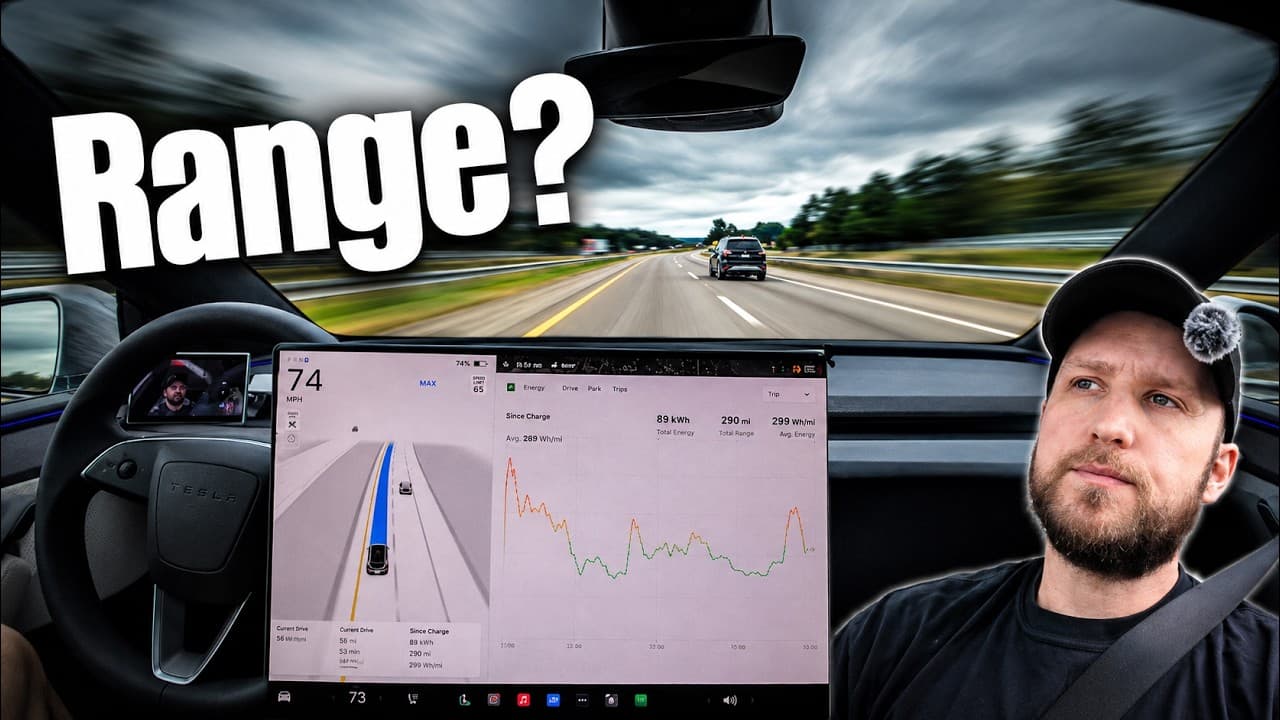
A week or so after that, Chris of the Dirty Tesla channel took a loaner Model Y L onto Michigan highways with a much cruder brief: set the cruise near 75, drive out and back, end at a Supercharger. Conditions were mild — he noted 68°F, no serious wind, flat terrain — and he left the climate control on because the point was a realistic drive rather than a hypermiling stunt. Same 20-inch wheels with the aero covers fitted.
At one checkpoint he had covered 50.7 miles in 42 minutes — 72.4 mph — at 222 Wh per mile, which he worked out to around 370 miles on a full pack. By the end of the run, with the car preconditioning the battery for the Supercharger stop and burning noticeably more energy for it, the figure had settled to about 228 Wh/mi at a roughly 70 mph average. Using the capacity figure shown in the car, he projected about 359 miles from that consumption. His summary was that buyers should expect over 350 miles at highway speeds on the 20s, and rather more on the smaller 19-inch wheels.
That is the strange comparison. Edmunds averaged 40 mph and measured 358 miles. Dirty Tesla averaged around 70 mph and projected 359 from the energy use displayed during a shorter drive. Normally a steady highway projection sits well below a mixed-route result, but different routes, weather and test methods mean the one-mile gap should not be treated as laboratory-grade agreement. On a previous trip he had run the car in Hurry mode at a locked 80 to 82 mph and still calculated a full-pack range near 300 miles, which suggests the penalty only really bites well above legal limits.
Why a bigger box goes further
The explanation is mostly aerodynamic, and Tesla appears to have spent the extra wheelbase carefully. The Model Y L's drag coefficient is 0.216 — lower than the standard Model Y — helped by the enclosed 20-inch Uberhelix wheels and a rear spoiler moulded directly into the tailgate rather than bolted on afterwards. Not a Tesla App reported that Tesla's engineers credit that moulded spoiler alone with 15 miles of range, while also lifting the third-row brake light out of the way for headroom.
The battery grew too, but not dramatically: about 83 kWh, roughly 4% up on the regular car, using longer modules that the stretched floor allows. Dirty Tesla referred to 81 kWh of usable capacity while poking around the interior. There is also a thermal story — a triple-layer silver coating on the glass roof rejecting 30% more solar heat, feeding the first three-zone climate system Tesla has fitted to anything.
Tesla's specifications also differ by market. The host of The Electric Viking compared the US car with the Shanghai-built Australian export, reported with a larger 88.2 kWh pack and a 681 km WLTP rating, and expressed surprise that the American car with the smaller battery performed so strongly. That Australian specification should not be confused with the Chinese-market Model Y L, which has generally been reported with an 82 kWh pack and a 751 km CLTC rating.
What it does not fix
Charging is still the ceiling. Dirty Tesla plugged in at 4% at a 325 kW Supercharger in Brighton, Michigan, and watched the car peak at about 251 kW, hold above 250 for a few minutes, then taper hard in the familiar Tesla pattern. He was frank that sitting there watching it was brutal, even if a family with two kids usually walks away from the car anyway.
Price is the other asterisk. InsideEVs lists the Model Y L at $63,630, which is $4,000 more than the Model Y Performance and about $16,000 above the Model Y Premium. DennisCW speculated that a future rear-drive Model Y L could reach 400 miles, but that version does not exist and the claim is his, not Tesla's.
What exists is a three-row electric SUV that beat Tesla's 320-mile estimate in Edmunds' mixed-route test and used little enough energy on a separate mild-weather highway run to support a 359-mile projection. A controlled full-pack highway test would be needed to confirm that estimate, but neither result suggests owners should automatically deduct a quarter from the displayed range before planning a trip.
- https://www.edmunds.com/car-news/2027-tesla-model-y-l-range-tested.html
- https://insideevs.com/news/805339/tesla-model-y-l-range-test-edmunds/
- https://www.notateslaapp.com/news/4592/tesla-model-y-l-beats-range-estimates-in-real-world-test
- https://www.youtube.com/watch?v=rilj290t6kI
- https://www.youtube.com/watch?v=RfBvGkisf1g
- https://www.youtube.com/watch?v=YJM3Uuy2ROw
- https://www.youtube.com/watch?v=CkDgyGZA9WE
More from the file

The 2026 Solterra earns a second look, with a motorway-range caveat
Fresh French efficiency testing and an earlier US charging test show why the revised Solterra deserves another look, and why buyers must keep market specifications separate.

Two Independent Tests, One Number: The VW ID.3 Neo Really Does Use 15 kWh/100km
German and British testers put the 58 kWh ID.3 Neo through separate real-world runs days apart and arrived at nearly identical efficiency. That single figure reshapes which battery you should buy.
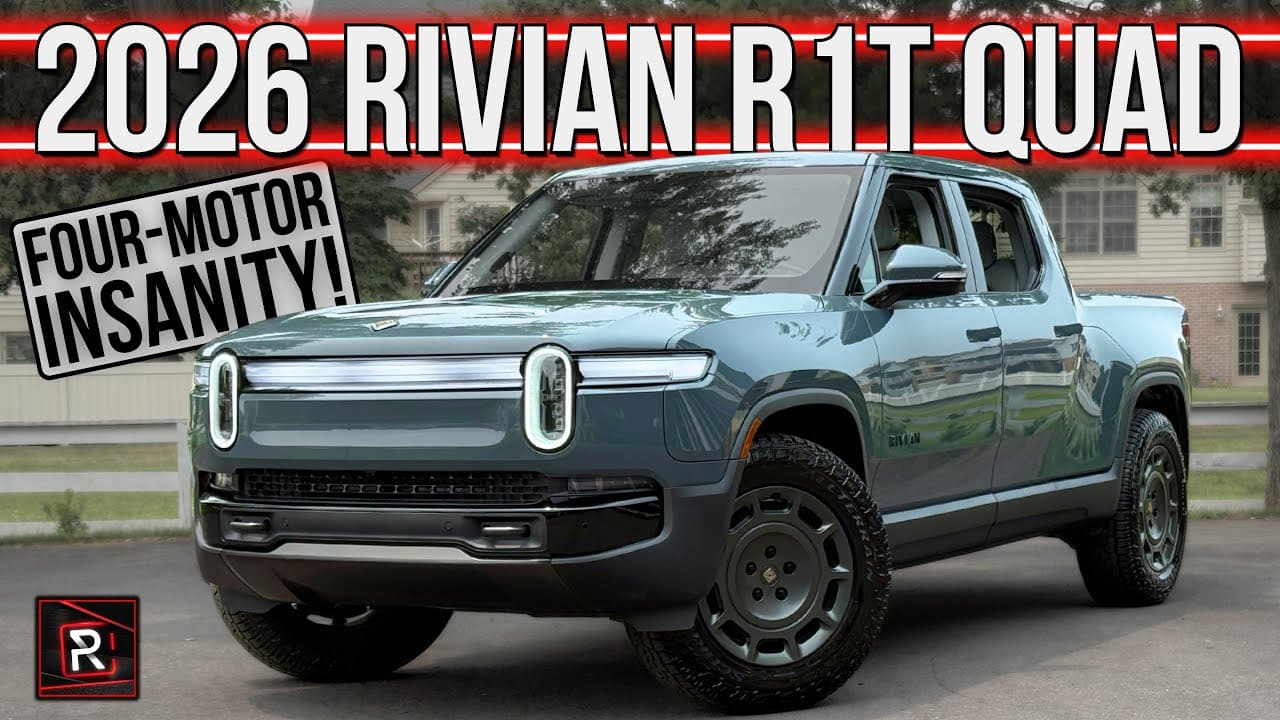
Rivian's 1,025-horsepower R1T costs $124,000. Its charging is less exotic
The quad-motor R1T is among the quickest vehicles on sale, but it is not especially efficient, tops out at 220 kW and still lacks massaging seats.