
The Rivian R2 went 253 miles and 304 miles. Both range tests can be right
Three independent Rivian R2 tests produced a 51-mile spread. Their routes, speeds and tyres explain more than the headline numbers do.
By EV News Desk
A Rivian R2 Performance can travel 304 miles on one charge. It can also travel 253 miles. A third tester saw roughly 260 miles before stopping with a little energy remaining. None of those results needs to be wrong.
The 51-mile spread is a clean demonstration of what gets lost when a real-world EV range result is stripped of its test method. Edmunds used a mixed city-and-highway route. Out of Spec Reviews held the car at 70 mph. State of Charge drove another R2 at highway speed through a large Colorado elevation swing, wearing all-terrain tyres. Each result answers a different ownership question.
A held 70 mph bought 253 miles
Out of Spec's comparison put an R2 Performance on 21-inch all-season tyres against a Tesla Model Y Performance, running at a GPS-verified 70 mph until the vehicles could no longer maintain the target speed. Kyle Conner later put the result at 256 miles, or 253 after the team's correction. That is 77% of the Rivian's 330-mile combined EPA estimate.
The result prompted enough argument for Out of Spec to publish a follow-up explaining its method. Conner's central point was not that an R2 owner will always get 253 miles. It was that a constant 70 mph test measures sustained high-speed efficiency, while the combined EPA label blends different laboratory cycles. Aerodynamic drag rises sharply with speed, and a tall, adventure-oriented SUV pays for its shape once that speed is held.
On a road trip, that is the figure that actually governs the distance between chargers. For that use, 253 miles is more informative than a slower mixed-driving result, but it still is not a winter guarantee. Wind, rain, temperature, wheel choice and cabin heating can pull the number in either direction.
Colorado adds tyres and topography
State of Charge's Tom Moloughney tested a Performance model on 20-inch all-terrain tyres. His dashboard showed 259.4 miles at the end, with 1% state of charge and four indicated miles remaining. He estimated the car could have reached about 264 or 265 miles if driven to exhaustion.
This was not a flat-course laboratory run. Moloughney recorded a route spanning about 2,200 feet between its lowest and highest points, traversed in both directions. He also noted wind during the test, including a spell near 18 mph. The relevant comparison was therefore the all-terrain configuration's 276-mile EPA highway figure, not the 330-mile combined figure attached to the range-favouring 21-inch all-season setup. His measured distance finished much closer to that 276-mile benchmark.
Tyres are not a footnote here. Rivian lists 21-inch all-seasons as standard on R2 Performance and 20-inch all-terrains as optional. More aggressive tread and different wheel geometry trade some efficiency for capability. Comparing an all-terrain R2 with a 330-mile all-season label quietly changes the car before the arithmetic begins.
Edmunds' mixed loop found 304
Edmunds measured 304 miles from an R2 Performance on 21-inch all-season tyres, 26 miles below the 330-mile EPA estimate. Its recorded consumption was 33.6 kWh per 100 miles, against the EPA rating of 32 kWh per 100 miles.
The larger number is not evidence that the two highway tests left 40-plus miles undiscovered. Edmunds drives about 60% city and 40% highway, follows posted limits and holds the climate control at 72 degrees Fahrenheit. Lower-speed driving gives an EV more time per unit of distance, but it demands far less power to push air aside. Regenerative braking also recovers energy during deceleration. A boxy electric SUV should be expected to travel farther in that cycle than at an unbroken 70 mph.
Rivian quotes a 10-to-80-percent DC charge in about 29 minutes, a figure Edmunds repeated in the comparison. That does not close the highway-range gap. It does give a road-tripper a second number to budget besides the miles already in the pack.
Read the route before the result
For mixed everyday use, the evidence points to an R2 Performance capable of about 300 miles in mild conditions. For sustained 70 mph travel, the current tests cluster in the mid-250s to mid-260s, depending on tyres, terrain and the chosen endpoint. Neither should be presented as a promise for every journey.
The tests did not contradict each other. A single combined range label invites buyers to compare unlike journeys. The R2's results line up as soon as speed, route and tyres return to the headline.
More from the file

The 2026 Solterra earns a second look, with a motorway-range caveat
Fresh French efficiency testing and an earlier US charging test show why the revised Solterra deserves another look, and why buyers must keep market specifications separate.

Two Independent Tests, One Number: The VW ID.3 Neo Really Does Use 15 kWh/100km
German and British testers put the 58 kWh ID.3 Neo through separate real-world runs days apart and arrived at nearly identical efficiency. That single figure reshapes which battery you should buy.
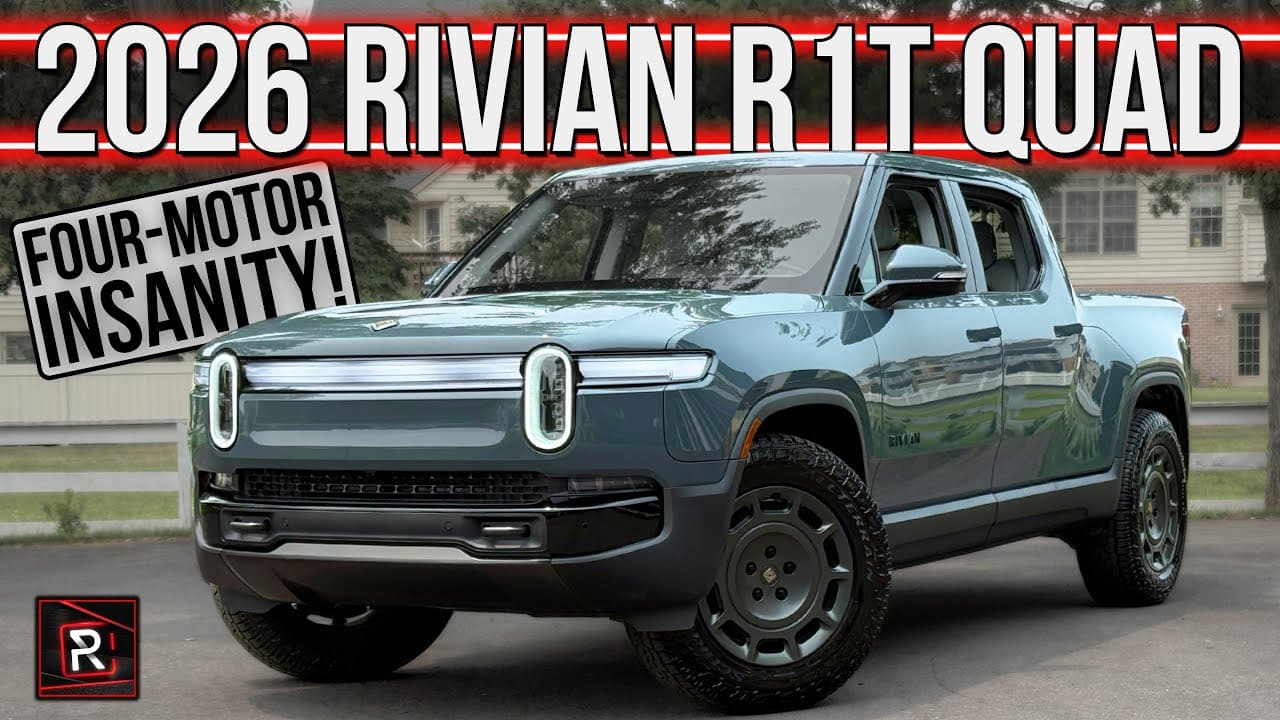
Rivian's 1,025-horsepower R1T costs $124,000. Its charging is less exotic
The quad-motor R1T is among the quickest vehicles on sale, but it is not especially efficient, tops out at 220 kW and still lacks massaging seats.