Mahindra calls it battery-as-a-service. Its small print calls it two loans
Mahindra's EV prices look up to ₹10 lakh lower under BaaS, but buyers own the battery, repay it for as long as eight years and do not pay by distance.
By EV News Desk
On 28 August Mahindra spread “Battery-as-a-Service” across the BE 6 Sporteq, XEV 9S and XEV 9e. The advertised arithmetic is dramatic: take as much as ₹10 lakh off the upfront vehicle price and describe the battery as an effective ₹3.75 per kilometre.
Mahindra's own FAQ is blunter. “BaaS / Dual Loan offered by financiers on Mahindra’s EV is neither a battery subscription, nor battery rental / pay-per-use program,” it says. The customer buys and owns the car and battery. There is no charge tied to kilometres actually driven. There are simply two finance components, with the battery loan potentially running longer than the vehicle loan.
This may still be useful financing. It is not battery-as-a-service in the familiar sense, and that distinction changes how a buyer should compare it with a normal car loan or a genuine battery rental plan.
₹3.75 per kilometre is an illustration
Mahindra bases its headline figure on 60 km of daily driving and a battery EMI starting at ₹6,975. Multiply 60 km by 30 days and the assumed driver covers 1,800 km a month; multiply that by ₹3.75 and the result is ₹6,750, close to the stated starting payment before the exact finance terms are applied.
Drive 500 km in a month and the EMI does not fall to ₹1,875. Drive 3,000 km and it does not rise to ₹11,250. Mahindra explicitly says there is no minimum running requirement and that actual use is at the customer's discretion. The per-kilometre presentation is a cost simulation, not a meter attached to the odometer.
The company says vehicle finance is usually offered for up to five years, while battery finance may extend to eight years. Rates, fees, deposits and repayment schedules come from the finance partner and depend on the customer's credit profile. Both loans remain connected at the finish: Mahindra says a financier's no-objection certificate to remove hypothecation can be blocked until dues across both are cleared.
That makes the essential comparison monthly, not per kilometre. The useful quote is the vehicle-loan principal, the battery-loan principal, the interest rate, processing fees, insurance requirements, total interest and total amount payable, set against a conventional loan for the complete EV over the same deposit and term.
The lower sticker is not the total price
Independent pricing compiled by Autocar India shows why the structure catches attention. A BE 6 Sporteq One with a 59 kWh pack is listed at ₹19.45 lakh without BaaS and ₹11.45 lakh under the split structure, an ₹8 lakh difference before battery repayments. A 79 kWh Three+ shows a ₹10 lakh split. The XEV 9S starts at ₹12.65 lakh under BaaS versus ₹20.65 lakh for its 59 kWh One Above, while the XEV 9e One moves from ₹21.90 lakh to ₹13.90 lakh.
Those figures are best read as the amount assigned to the vehicle side, not a discount on the complete machine. The battery has not vanished from the bill. Mahindra's FAQ says the customer purchases it as part of the complete package, and both monthly obligations form the total financing cost.
The distinction is sharper because genuine per-kilometre plans exist in the same market. Autocar India's round-up describes MG's Windsor battery rental as a subscription fee tied to distance. Mahindra's plan instead uses assumed distance to translate a fixed finance payment into an easy marketing number. Calling both products BaaS makes comparison harder precisely where the label is supposed to simplify ownership.
A good EV can still have confusing finance
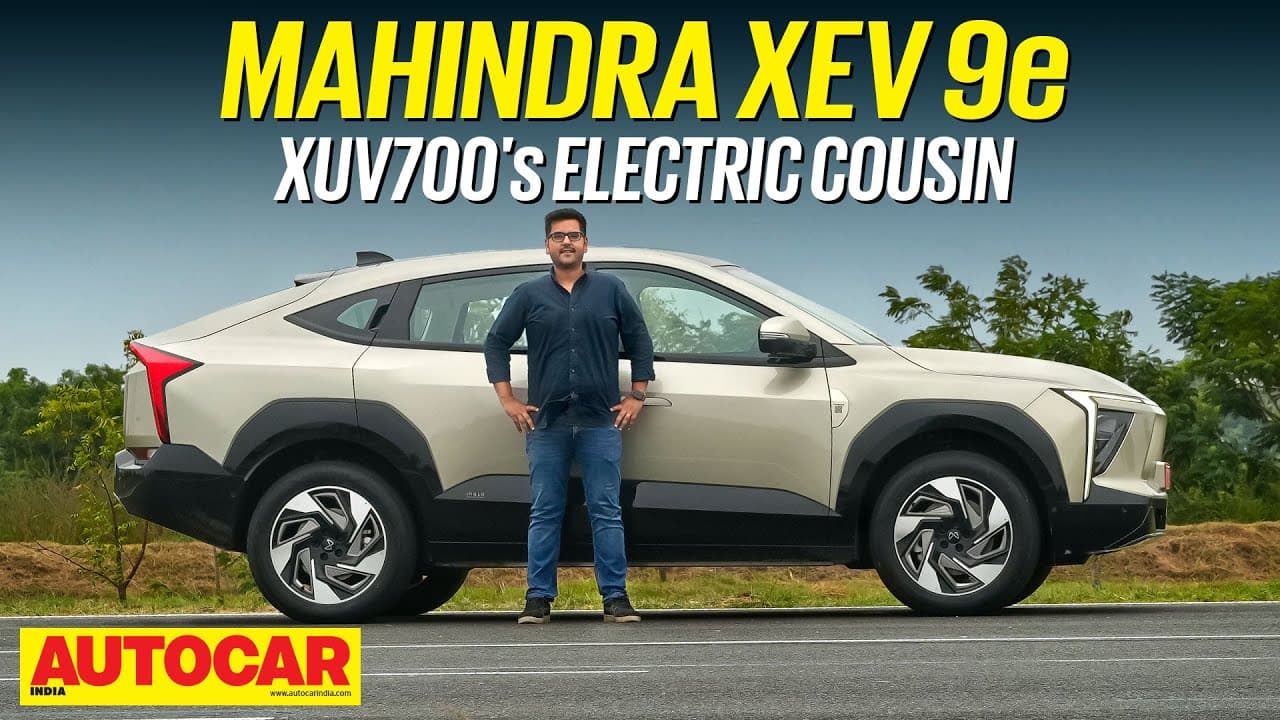
The finance criticism is separate from the cars. In a transcript-checked Autocar India road test, the reviewer found the XEV 9e comfortable and roomy, praised its refinement and semi-active suspension, and recorded 0-100 km/h in 7.3 seconds using the car's timer. The review also noted 59 kWh and 79 kWh LFP packs, rear-wheel drive and DC charging up to 175 kW. Those judgements are subjective, but they establish why a shopper might want the product before confronting the payment structure.
Choosing the dual loan does not change the applicable battery warranty, Mahindra says. It also does not transfer battery degradation risk to a rental company, because the buyer owns the pack. In a total loss or major-damage case, the insurance policy and both finance agreements determine how outstanding debt is settled. That is another question worth putting in writing before signing.
The practical benefit is cash flow. A longer battery loan can reduce the initial amount and monthly burden during the first vehicle-loan years, potentially opening a capable EV to a buyer who cannot fund the complete purchase on conventional terms. The cost is a longer tail of debt, and a sales presentation that can make financed principal resemble usage-based service.
Treat Mahindra BaaS as its FAQ tells you to treat it: a dual loan. Ignore the ₹3.75/km figure until the lender supplies a personalised schedule, then compare total rupees paid. The battery is yours from day one. So is the debt.
- https://www.mahindra.com/news-room/press-release/en/mahindra-expands-battery-as-a-service-across-its-entire-electric-origin-suv-portfolio
- https://booking.mahindra.com/be-6-sporteq/baas-faq.html
- https://www.autocarindia.com/auto-features-amp/all-evs-available-with-baas-battery-rental-scheme-listed-440264
- https://www.youtube.com/watch?v=VGUwsBIrHlQ
- https://www.carwale.com/news/mahindra-extends-baas-programme-to-xev-9s-and-xev-9e/
More from the file
What a Silverado EV Owner Learned About Adapters, Split Packs and a 30-Day Battery Wait
A 2026 Silverado EV pulled 306 kW on an 800-volt charger but fell to about 80 kW through a Tesla adapter. Then it stopped charging entirely, and the month that followed exposed how little owners can learn about EV battery replacements.

A plumber tested an electric van for two weeks. Overnight charging decided the verdict
Public rapid charging made an electric van only slightly cheaper than diesel at 20–22p a mile. A full overnight charge cost about £6.