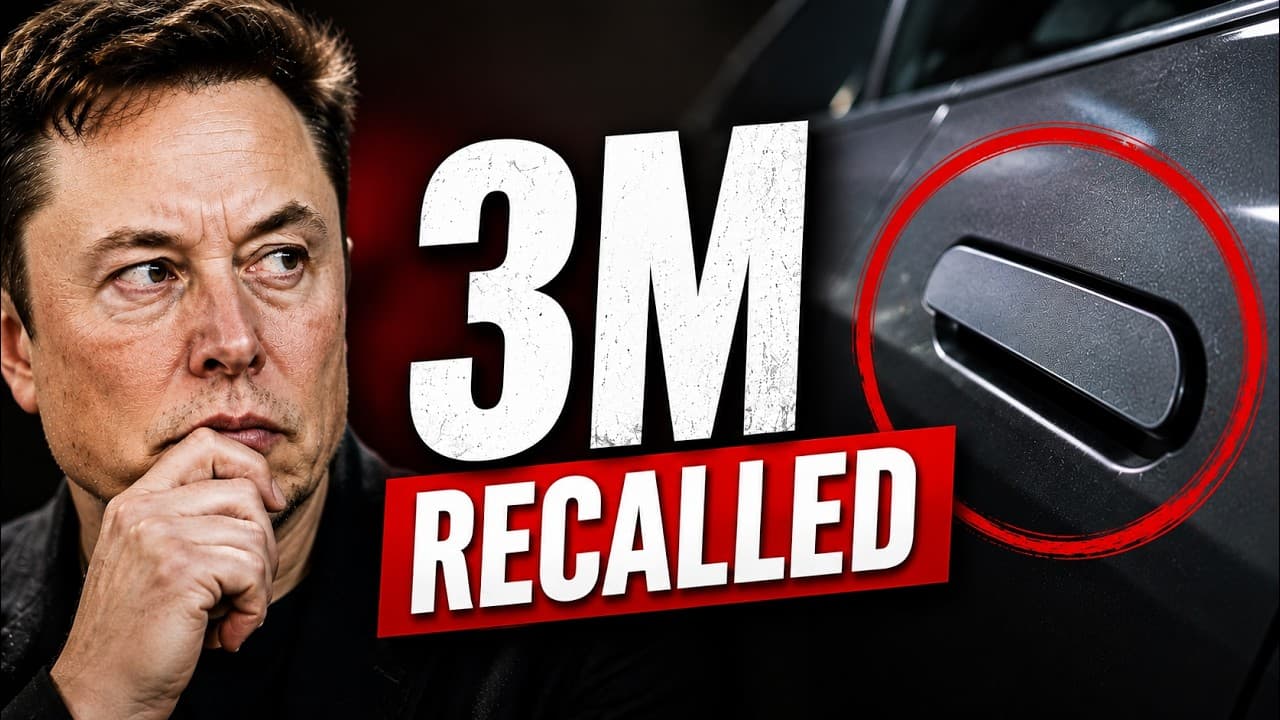
China's seven-million-car recall day puts emergency door releases in focus
Door-release recalls cover more than four million cars, led by 2.98 million Teslas. A separate Tesla driver-monitoring action took the day's combined filings above seven million.
By EV News Desk
China's largest single day of vehicle recall filings put an obscure plastic lever at the centre of a safety debate, but not every car in the headline total was recalled for its doors.
China's State Administration for Market Regulation disclosed on 21 August that ten manufacturers had filed recall plans on the same day. Door-release actions covered more than four million vehicles; a separate 2.74-million-car Tesla driver-monitoring recall pushed the combined day's filings above seven million. Tesla, Xiaomi, Leapmotor, Xpeng, Zeekr, Chery, Geely Auto, Dongfeng, Arcfox and FAW are all in. The complaint against nearly all of them is identical: the interior emergency mechanical door release is finished in a colour close to the surrounding trim and is therefore hard to identify and hard to operate.
SAMR's reasoning is specific about when that matters. In a severe crash that knocks out the vehicle's low-voltage system, occupants may have to fall back on the mechanical release to get out, and rescuers working from outside face the same obstacle. A control that is merely inconspicuous during a test drive becomes a different object in a dark, damaged, possibly smoke-filled cabin.
Who is recalling what
Tesla is the largest participant by a wide margin. According to CnEVPost's tally of the SAMR filings, its door-release recall covers 2,975,910 cars effective 25 September: 973,156 domestically built Model 3s, 1,956,713 domestically built Model Ys, plus 35,590 imported Model 3s, 8,328 Model Xs and 2,123 Model Ss. A separate Tesla filing, effective immediately, covers 2,740,642 China-built Model 3s and Ys over driver attention monitoring, which the regulator judged insufficient to alert a driver whose eyes have left the road. Tesla's fix there is to add in-cabin camera monitoring on top of the existing steering wheel torque check.
Behind Tesla, Xiaomi is recalling 390,435 examples of the 2024 SU7 series; Leapmotor 371,200 C11s and C01s; Xpeng 264,842 G6, P7+ and X9 models; Zeekr 92,658 007s and X models; Chery 68,488 iCar 03s and Fulwin X3s; Dongfeng 53,452 cars across the Nammi 06, Aeolus L8 and two badge-engineered siblings; BAIC BluePark Magna 46,850 Arcfox Koalas; and FAW 11,908 EH7s and Tiangong 08s.
Seven million cars, and almost no new hardware
Tesla is not replacing nearly three million door handles. Its remedy is warning labels applied free of charge, plus an over-the-air update that adds a post-crash window-lowering strategy. Cars that already carry the labels do not need them again.
Xiaomi is adding labels and using an OTA update to rework its centre console unlocking logic and window-lowering behaviour. Xpeng's remedy is labels alone. Only Chery and BAIC are swapping physical parts, and the parts in question are the covers over the emergency release, replaced with improved ones carrying text.
The business channel Operating Logic put the obvious question directly in a video breakdown of the filings: if regulators are worried about the doors, why is Tesla changing the windows? Its answer is that the recall was never really about the handle mechanism. It is about whether a trapped occupant can find any route out once the electronics are gone, and a window that drops itself after a collision is a second route. The channel also noted that a recall of this scale delivered largely through software does not carry the cost of a recall of this scale delivered through service bays.
That is worth sitting with. The combined recall day is the largest in Chinese automotive history. For many of the door-release cases, the remedy is a label and firmware rather than a replacement handle.
The rule that actually changes cars
The longer-term story is GB 48001–2026, the mandatory national standard for door handles released in February. From 1 January 2027 every new model must carry a mechanical release mechanism on every door, which ends the fully electronic hidden handle as a design option in China. Models already holding type approval get a transition period through January 2029. The standard also requires visible labelling showing occupants how to trigger the emergency release.
Flush handles existed for reasons that were never frivolous: a small aerodynamic gain, a cleaner surface, and an immediate visual signal that this car is not the one you grew up with. Tesla did more than anyone to make that signal legible, and much of the industry copied it. A regulator applying a post-crash egress test to the same feature reaches a different verdict, and China has now written that verdict into type approval.
Nobody else has followed — yet
Europe is watching rather than acting. The Dutch RDW, which holds Tesla's European type approval, confirmed on 26 August that no recall is planned over retractable handles, on the reasoning that flush handles are not inherently a problem provided a door still opens “intuitively and without tools” from inside or outside when the power dies. The regulator told Reuters it is following the situation closely but declined to say whether an investigation is open.
That is a functional test rather than an aesthetic one, and it leaves the burden with manufacturers to show their existing manual releases are discoverable in a panic — precisely the claim SAMR rejected.
In the United States, NHTSA denied a petition in July asking it to open a defect investigation into hidden manual door releases on roughly 180,000 Model 3s. The petitioner had reported being unable to locate the mechanical release and climbing into the back seat to get out. The agency said the petition did not present evidence of a likely safety-related defect, while adding that the issue would be better addressed through industry-wide rulemaking on emergency egress.
Three regulators, three answers: a recall plus a ban, a watching brief, and a rulemaking that has not been written. Only one of them changes what a car looks like, and it governs the market where most of these cars are built.
- https://cnevpost.com/2026/08/21/china-biggest-auto-recall-hits-tesla-xiaomi-leapmotor-others/
- https://www.motor1.com/news/806323/tesla-china-door-handle-recall/
- https://www.reuters.com/world/tesla-fix-software-millions-china-made-imported-evs-china-2026-08-21/
- https://www.federalregister.gov/documents/2026/07/24/2026-15010/denial-of-motor-vehicle-defect-petition
- https://www.reuters.com/legal/litigation/us-auto-safety-regulator-denies-petition-seeking-tesla-door-release-defect-probe-2026-07-24/
- https://www.youtube.com/watch?v=LdLpjiGl0x8
More from the file
Washington Is Rewriting the MPG Rules, and the EV Math Changes With Them
A fleetwide 34.5 mpg target for 2031 instead of 50.4, a quiet reclassification fight over whether pickups count as cars, and a separate rule narrowing heavy-truck standards. What the CAFE rewrite does to the electric side of the business.
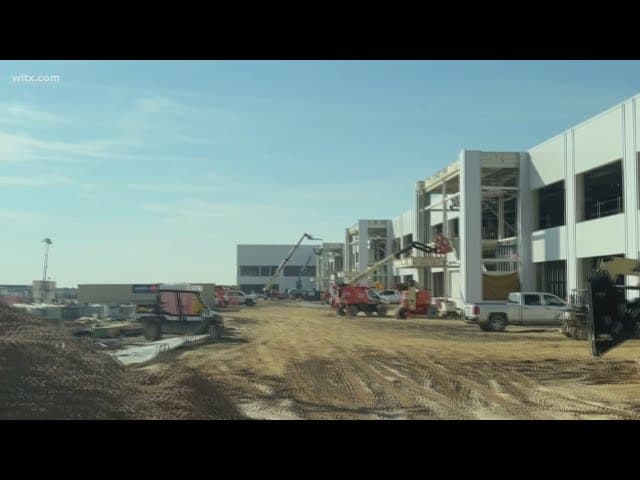
South Carolina flattened 1,600 acres for Scout. The bill kept growing
The state promised Scout Motors a finished site in Blythewood. A stalled wetlands permit, idle earthmovers and a wet 2024 added $150 million to the tab, and lawmakers wanted an audit before paying it.
Europe's EV battery passport has 71 fields, but buyers will not see all of them
New EU guidance maps the data work behind the 2027 battery passport, and a real limit: access depends on who is asking.