The used EV bargain may be sitting on its next four-figure bill
Battery health gets the attention, but four worn or incorrectly specified tyres can erase a used EV bargain before the first service.
A used electric car can pass the expensive checks and still be wearing its next large bill in plain sight. The battery report looks healthy. The charging cable is present. The dashboard has no warnings. Then somebody crouches beside the car and finds four tyres close to their wear bars, mismatched across the axles, or carrying the wrong load rating.
Tyres are ordinary consumables, which is precisely why they are easy to mentally deduct from a pre-purchase inspection. On an EV, however, they also carry more of the car's engineering than the word "consumable" suggests. A buyer is not merely checking how much rubber remains. They are checking whether the car can carry its mass, stop in the wet, preserve range and remain quiet without an engine masking the road roar.
Start with the sidewall, not the EV badge
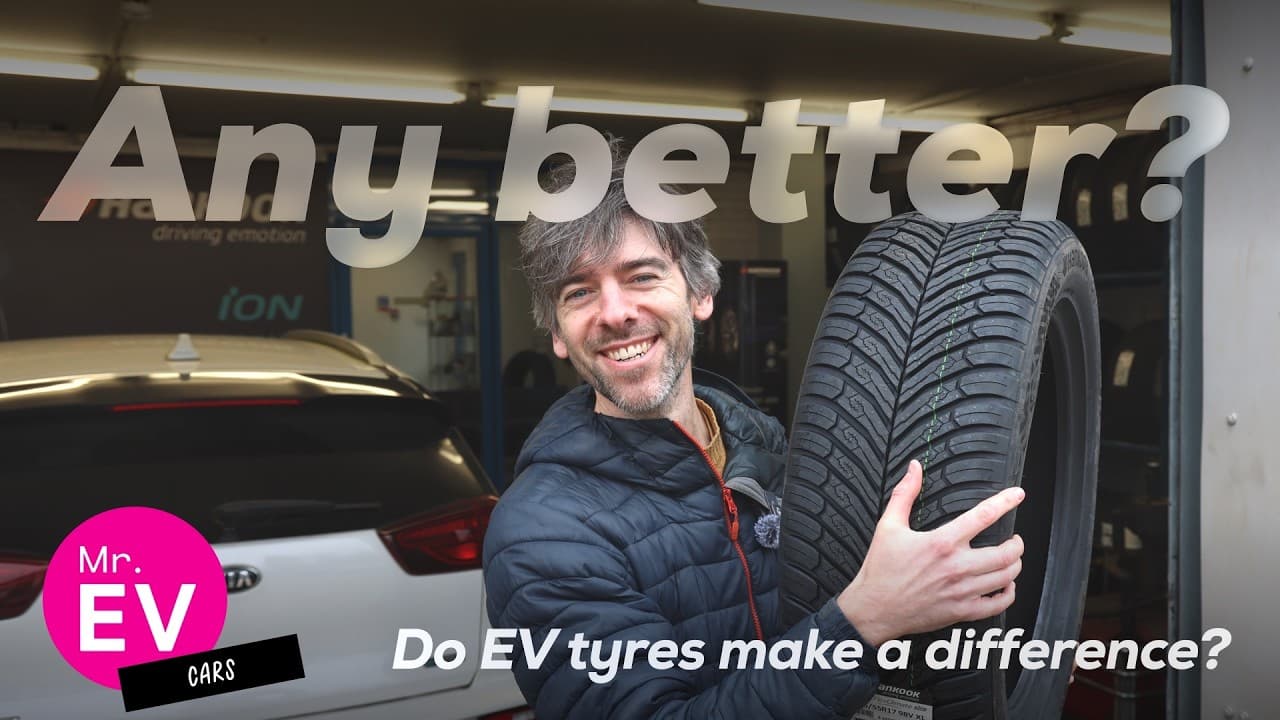
The useful rule from owner-focused testing is wonderfully unglamorous: buy the specification, not the marketing label. Everyday Chris's investigation of EV-specific tyres walks through the size, speed and load codes on the sidewall and the manufacturer placard. The important letters for a heavy electric car are often XL, for extra load, or HL, for high load. A tyre can share the same width, profile and wheel diameter as the factory fitment and still be unsuitable if its load index is lower.
That matters on a used car because a cheaper replacement may look correct from two metres away. Check all four sidewalls against the door-jamb placard, including the full load and speed rating. Then check whether the tyres match by model on each axle, inspect the inner shoulders as well as the visible outer tread, and look for uneven wear. Large wheels and aggressive alignment can hide their worst wear on the inside edge.
The 2026 test punctures an easy assumption
The newest comparative data also shows why simply ordering the most familiar premium name is not a complete strategy. A July 2026 Tesla Model 3 test put three 235/45 R18 EV tyres through the same wet, dry, noise and rolling-resistance programme. The original-equipment Giti Control P10 won overall, ahead of the aftermarket Michelin e.Primacy and original-equipment Bridgestone Turanza T005 EV.
The spread was not cosmetic. The Giti stopped from the wet test speed in 32.7 metres, versus 34.2 metres for the Michelin and 35.1 for the Bridgestone. It also posted the lowest rolling resistance at 5.5 kg per tonne. The Michelin was quietest and stopped shortest in the dry, but its rolling resistance measured 7.0 kg per tonne, 27% higher than the Giti result. One tyre did not win every job.
That trade-off is the core lesson. The quietest option, the longest-lived option, the lowest-energy option and the strongest wet-braking option may be four different products. Tyre Reviews' live 2026 database now combines four professional EV tyre tests with 57 owner reviews covering 685,968 miles. Its results span everything from a Michelin Pilot Sport EV owner reporting 55,000 miles with usable tread remaining to other drivers criticising grip or handling on efficiency-led tyres. The badge alone predicts very little.
Why EV tyres are different, and why they need not say EV
Engineering Explained breaks the design problem into four loads: weight, efficiency, noise and torque. More mass and immediate motor response ask more of the casing and compound. Low rolling resistance protects range. With no combustion engine filling the cabin, tread and tyre-cavity noise become conspicuous, so some products use foam bonded inside the tyre.
Jonathan Benson of Tyre Reviews reached a more nuanced answer in his EV-versus-standard comparison: an EV-specific design can restore steering response under a heavy vehicle, cut noise and improve efficiency, but a good conventional tyre with the correct load rating can still be appropriate. "EV" moulded into the product name is not a safety certification. The vehicle maker's size and load requirements are.
Andrew Till's 2026 road and track test adds the owner's side of that engineering. After comparing purpose-built EV tyres in normal driving and controlled exercises, his emphasis was on measurable compromises rather than a universal winner: efficiency, refinement, steering feel and grip moved by different amounts. That is more useful to a buyer than a blanket promise that special tyres fix EV wear.
A five-minute check with negotiating power
Before agreeing on a used EV, photograph every sidewall and the vehicle placard. Measure tread at the inner, centre and outer sections of all four tyres. Note manufacturing date codes, cracks, repairs and any foam-lined tyre that may need a tyre shop familiar with internal acoustic material. Ask when the wheels were last rotated and aligned, but trust the wear pattern more than the answer.
If replacement is close, price a complete set in the exact specification before negotiating. Do not assume the cheapest same-size listing is equivalent, and do not assume the factory brand is automatically best. Four legal tyres can still be four poor tyres for that car.
The traction battery remains the biggest unknown in a used EV. It is not the only one capable of changing the deal. Battery health may require software and a diagnostic report. The tyre bill is already written on the sidewalls.
- https://www.youtube.com/watch?v=m9e6zAh5pyc
- https://www.youtube.com/watch?v=NSLItTbFI4c
- https://www.youtube.com/watch?v=gg5MdeC6qzI
- https://www.youtube.com/watch?v=8pM9o2Ifcro
- https://www.tyrereviews.com/Tyre-Tests/top-tire-review-2026-tesla-model-3-ev-tyre-test.htm
- https://www.tyrereviews.com/Tyre-Type/Passenger-Car-Summer-Electric-Vehicle-Tyres
More from the file

A 234,000-mile Lightning gets a used battery. The repair matters more than the mileage
Out of Spec Renew replaces a high-mileage Lightning battery after a module fault. Ford warranty terms and fleet data explain what this repair can tell owners.

Audi Offers Up to $10,000 Off Lease Buyouts for Its EVs
A 1 September dealer bulletin cuts thousands from contractual buyout prices for Audi EV lessees and gives dealers $500 per completed deal. The discount is real, but lessees still need to compare it with market value.

EVs cost 33% less to drive in Europe, unless you have nowhere to park
The ICCT's EV Transition Check 2026 has a headline number and a footnote. Drivers who charge at home save a third on energy. Drivers who rely entirely on public chargers save five per cent.