Bolt wants 25,000 Lucid robotaxis. Lucid delivered 15,841 cars last year
Lucid and Bolt announced a plan for at least 25,000 autonomous EVs in Europe, but there is no order, no named driving software and the midsize platform has been delayed.
By EV News Desk
Bolt says it wants at least 25,000 driverless Lucids on European streets. In 2025 Lucid delivered 15,841 cars. The robotaxi fleet in Thursday's announcement is bigger than a full year of Lucid's customer business, and it depends on a vehicle platform that Lucid delayed only six weeks ago.
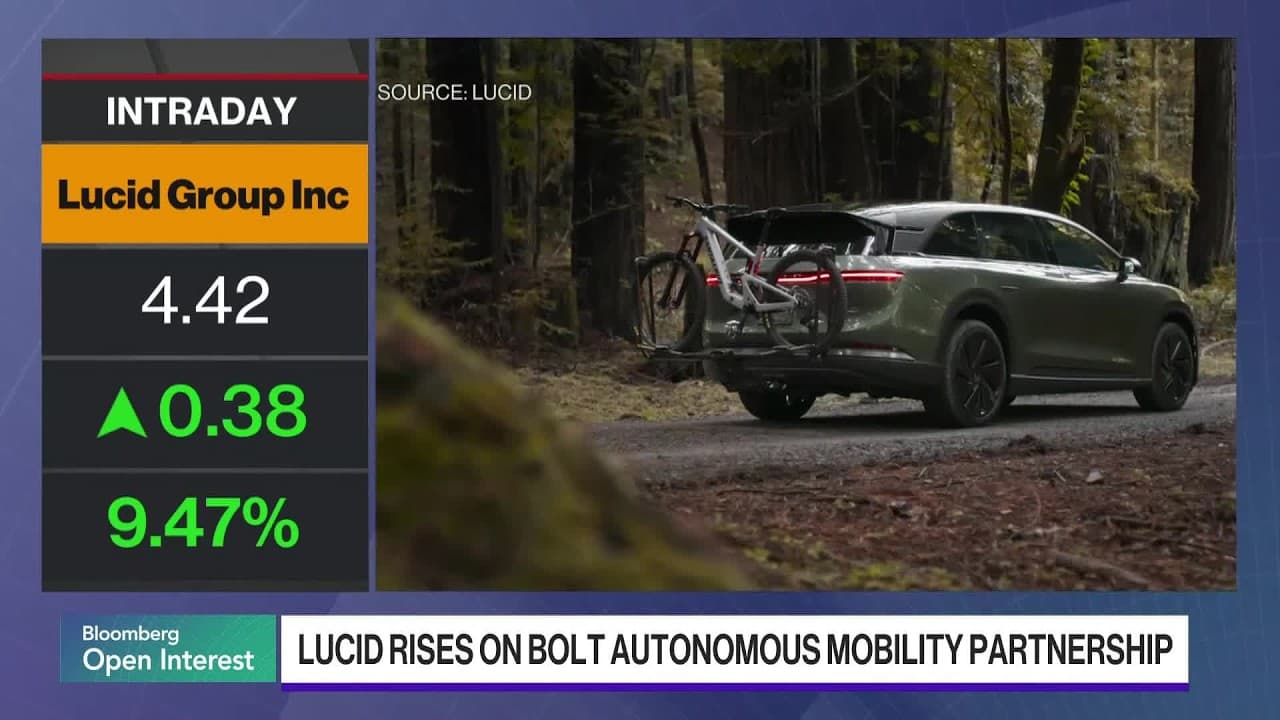
The market liked it anyway. Lucid shares rose by close to 10% in Thursday trading. Read the announcement closely, though, and it looks more like a statement of intent than an order.
What was actually signed
According to the companies, Bolt "aims to deploy at least 25,000 fully autonomous vehicles" built on Lucid's upcoming midsize architecture. The two will co-develop an "ADS-ready" vehicle designed for SAE Level 4 operation. It is expected to use Nvidia's Hyperion reference architecture, which is a package of compute hardware and sensors. Bolt Autonomous Driving Solutions, a unit set up for this work, will define the vehicle, software and safety requirements, and Bolt intends to own and operate the fleet itself. Lucid will handle its side through Lucid Technologies, a new division that brings together its AI, driver-assistance and autonomy teams.
TechCrunch reported that no money has changed hands and Bolt has not placed an order. AutoNext described the agreement as a memorandum of understanding with no financial terms. Unlike Uber, Bolt is not taking equity in Lucid. Neither company gave a deployment date in the release. AutoNext, citing Napoli's comments to the Financial Times, reported that a first batch could arrive as early as 2028.
Bolt's founder and chief executive, Markus Villig, described the job as a systems problem: "Autonomous driving in Europe requires data, software, vehicles, and operations to work as one system built for European roads and regulation." Lucid chief executive Silvio Napoli said: "Shared autonomous mobility offers the perfect opportunity to extend our unique technology beyond consumer vehicles."
The car doesn't exist yet
The Bolt deal depends on Lucid's midsize platform, which is also meant to underpin a cheaper consumer model. In its August operational reset, Lucid pushed that program's first vehicle back to the second half of 2027. The same year brought a new CEO, a cut of about 18% of the workforce, the withdrawal of 2026 production guidance and 3,953 second-quarter deliveries. Electrek pointed out the mismatch: fleet commitments keep growing while the company building the cars is still resetting itself.
Napoli told Bloomberg Television that the tough medicine had started on his second day in the job. "The work with AlixPartners has been concluded," he said, adding that the adviser's work had focused on reducing costs and on a target of cutting cash consumption by $1.4 billion. He also said Lucid's Saudi factory, which will build midsize vehicles, is nearing completion and should have its grand opening next year.
When he was asked whether future production would go mainly to robotaxis or to private buyers, he did not give a split. "Lucid was never designed to be only an EV company," he said, and went on: "The fact is the robotaxi market is at the beginning, is going to grow exponentially."
Lucid supplies the car, and someone else still has to supply the driver
Hyperion is hardware. It is not a finished self-driving system, and the announcement does not say who will write the software that drives these cars. Lucid declined to give TechCrunch any detail beyond the press release. That leaves the hardest part of the project, the part that makes a Lucid a robotaxi, open.
The Uber arrangement shows how long that can take. In July 2025, Uber committed to 20,000 Lucid Gravity robotaxis running Nuro's driving system, alongside a $300 million investment. Engadget and AutoNext now put the figure at 35,000 vehicles. Nuro is testing the Gravity robotaxi with a safety driver behind the wheel in Houston and the San Francisco Bay Area. On Bloomberg, Napoli said that project is due to launch "either end this year or beginning next year".
He also made clear that the Bolt deal is not exclusive. "So there is no exclusivity," he said. That works both ways. AutoNext noted that Bolt signed with Stellantis in December 2025, and at the time Stellantis was expected to play a major role in Bolt's plan for 100,000 autonomous vehicles by 2035. Bolt has also joined a pilot with Pony.ai. For now, Lucid is one supplier in a plan that has several.
What to watch instead of the headline number
In a video for Torque News, Armen Hareyan argued that the most important figure in the announcement was Lucid's 15,841 deliveries, not the 25,000. His point was that Bolt's number is a fleet ambition. According to Torque News, Villig told Reuters that European safety rules are significantly stricter than those in the US or China, and in Hareyan's reading that type-approval process is the real gate. His checklist is sensible: specific permit language, a midsize ADS-ready prototype testing in Europe, any sign that the 25,000 becomes committed annual volume, and confirmation that the Saudi plant's timing matches Bolt's fleet plan.
AutoNext suggested another test. The Uber commitment grew from 20,000 to 35,000 after Uber put in $500 million. Bolt has put in nothing so far. If a definitive agreement still says 25,000 once real money is involved, the number will carry weight.
None of this makes the deal meaningless. Bolt says it operates in more than 850 cities and has over 200 million customers, and a Level 4 vehicle designed around an operator's own data could be valuable. Still, the first driverless Lucid carrying Bolt passengers depends on a delayed car, driving software that hasn't been named yet and European rules that are still being written. Right now, 25,000 is a target.
- https://techcrunch.com/2026/09/17/lucid-motors-has-a-potential-robotaxi-partner-for-europe/
- https://electrek.co/2026/09/17/lucid-bolt-25000-autonomous-evs-europe/
- https://www.autonext.co/news/bolt-lucid-25000-robotaxis-europe-2028-midsize-nvidia-hyperion
- https://www.engadget.com/2261369/lucid-and-bolt-plan-to-deploy-at-least-25000-robotaxis-across-europe/
- https://www.youtube.com/watch?v=rqltW0v2qKQ
- https://www.youtube.com/watch?v=5lep-ppTGbk